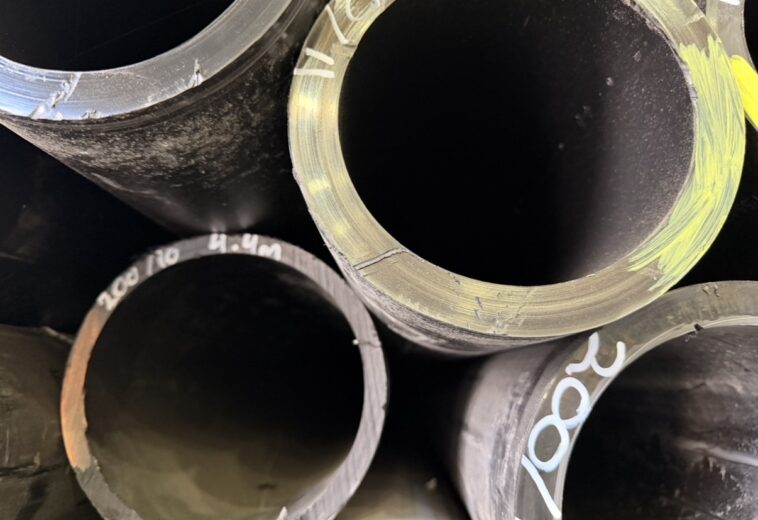
The Main Types of Poly Welding
There isn’t one universal fusion method.
The right technique depends on the pipe, fitting, application, diameter, installation conditions and project requirements.
The two major polyethylene pipe fusion methods are:
1. Butt welding
2. Electrofusion
Let’s look at what makes each one different.
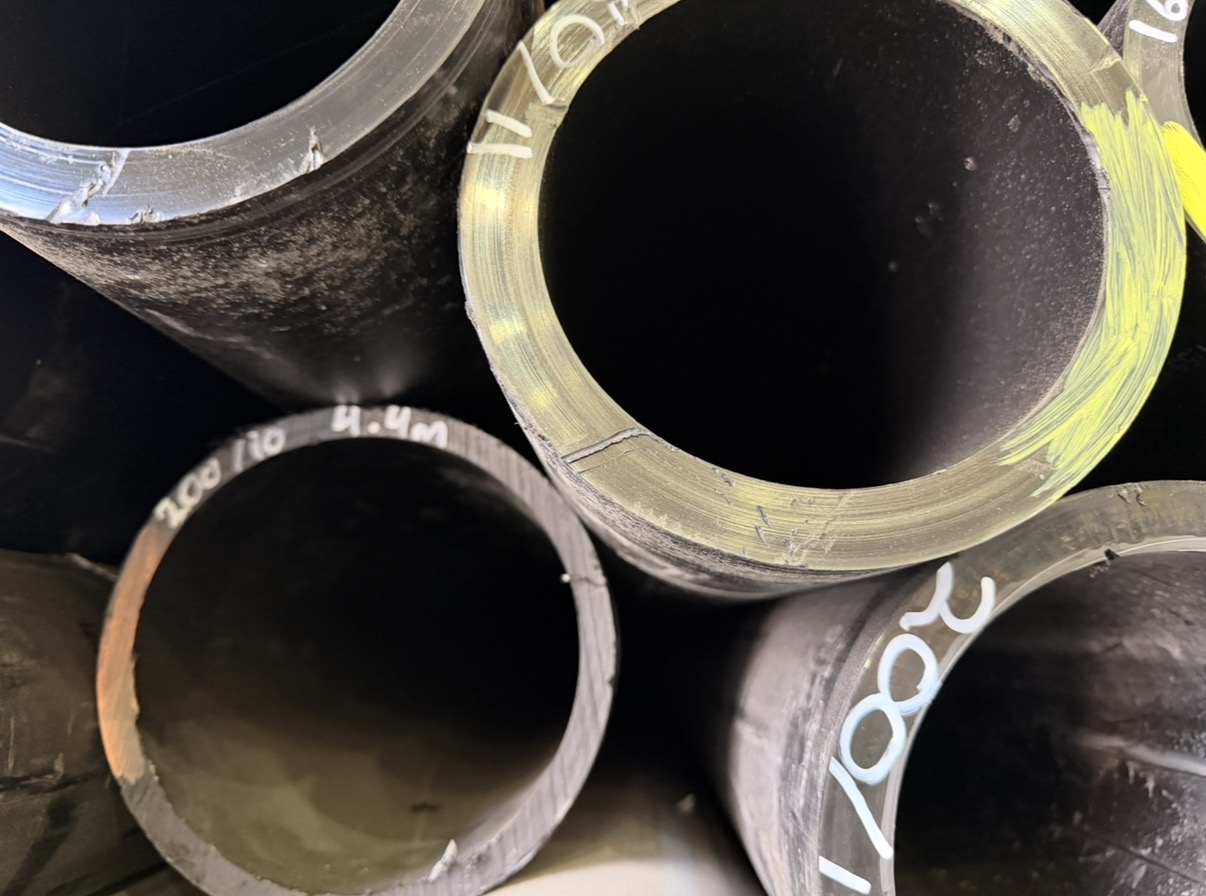
HDPE butt welding is one of the most widely recognised methods of joining polyethylene pipe.
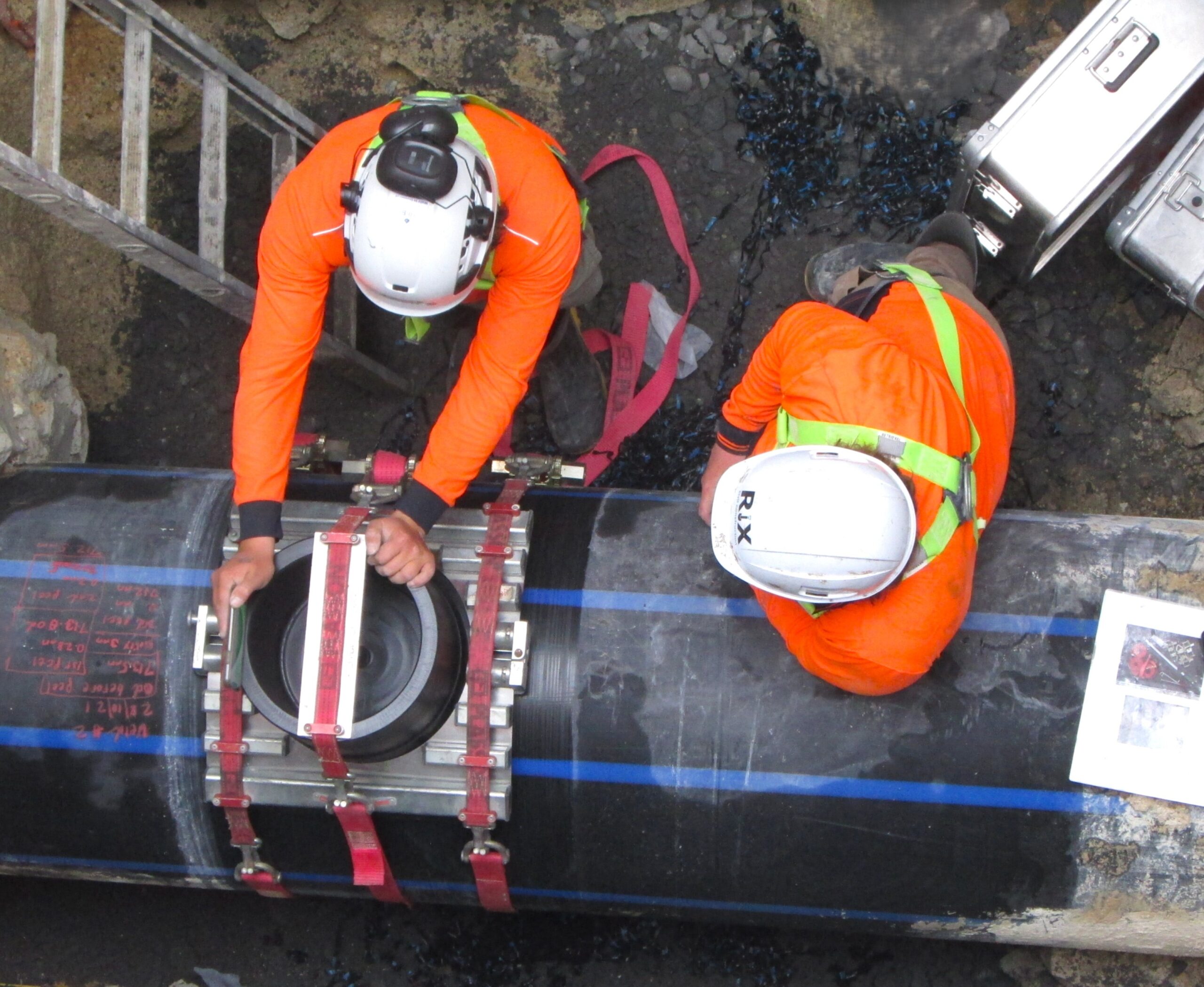
The ends of two pipes are held in a machine, prepared and heated using a controlled heating plate. Once the pipe ends have reached the required fusion condition, the heating plate is removed and the pipe ends are brought together under controlled force.
The joint is then allowed to cool. The result is a fusion joint of pipe, which is as strong or stronger than the pipe being joined.
1.Butt welding
This is commonly used in:
- Water pipelines
- Gas infrastructure
- Sewer and wastewater systems
- Mining
- Irrigation
- Industrial pipelines
- Civil infrastructure
The process can also be supported by data logging systems that record key welding parameters for quality assurance and traceability.
Butt welding isn’t just “heat and join”. This is where inexperienced operators can get themselves into trouble. Successful butt welding depends on controlling multiple variables, including:
- Pipe alignment
- Facing or milling
- Heating
- Fusion pressure
- Timing
- Cooling
- Equipment condition
- Environmental conditions
The specific parameters should always come from the applicable standard, pipe and fitting manufacturer’s requirements and approved fusion procedure.
2. Electrofusion
Electrofusion works differently.
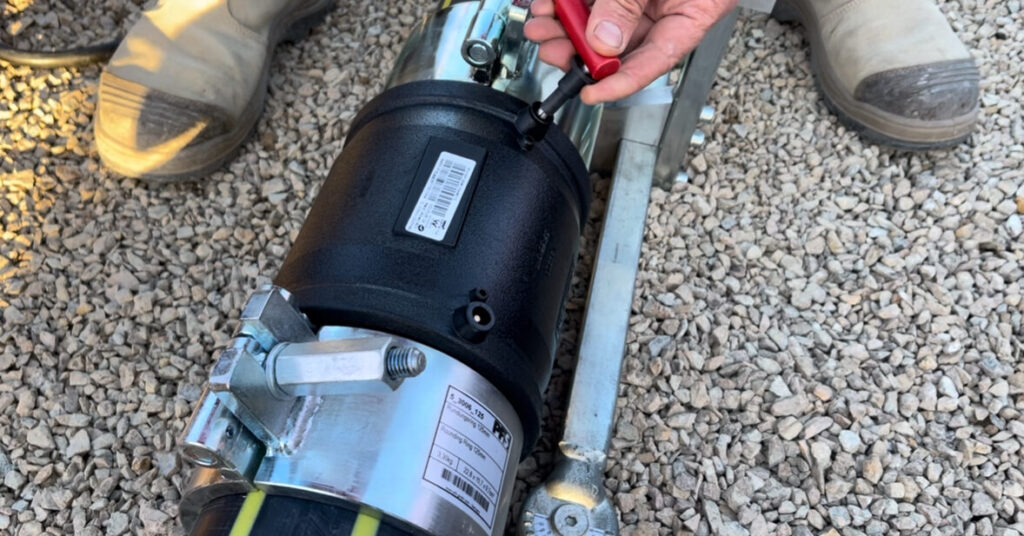
Instead of placing the pipe ends directly against a heating plate, the pipe is inserted into a specially manufactured electrofusion fitting.
The fitting contains a specially designed heating wire.
An electrofusion control unit sends electrical energy through these elements, generating heat and melting the polyethylene at the interface between the pipe and fitting.
The materials fuse together and are then allowed to cool.
Where is electrofusion used?
Electrofusion is particularly useful where access is restricted or where a mechanical butt fusion machine isn’t practical.
It is commonly used for:
- Water pipelines
- Gas networks
- Repairs
- Tie-ins
- Branch connections
- Complex pipeline configurations
- Confined installation areas
The big advantage is flexibility. But don’t confuse convenience with simplicity.
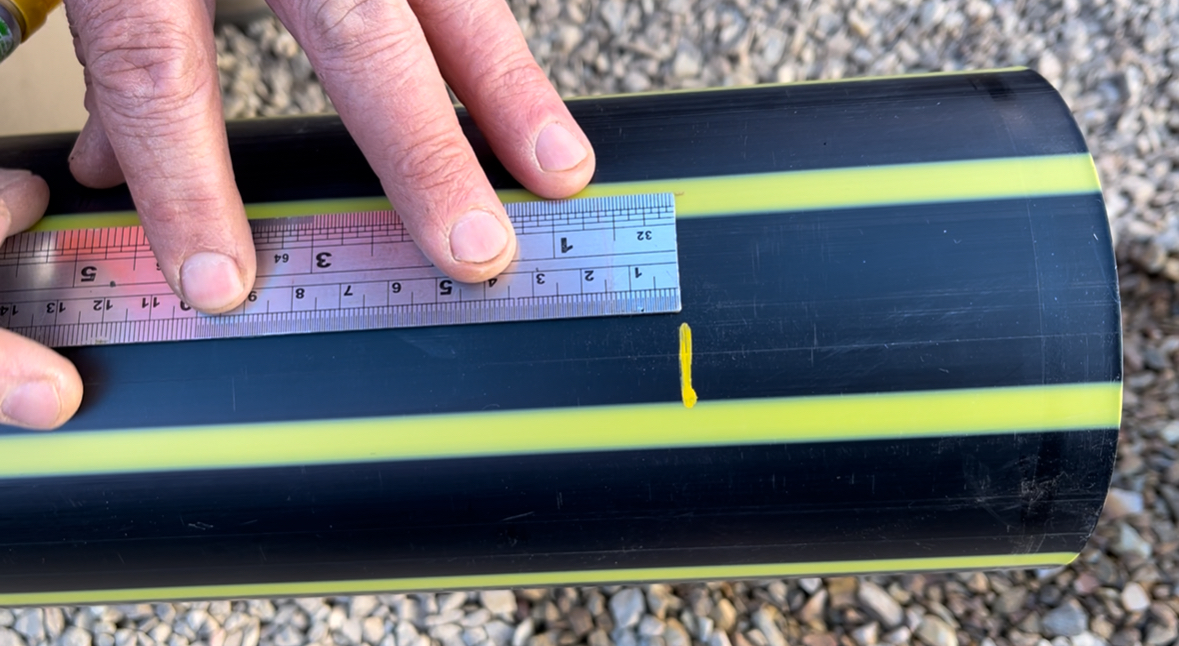
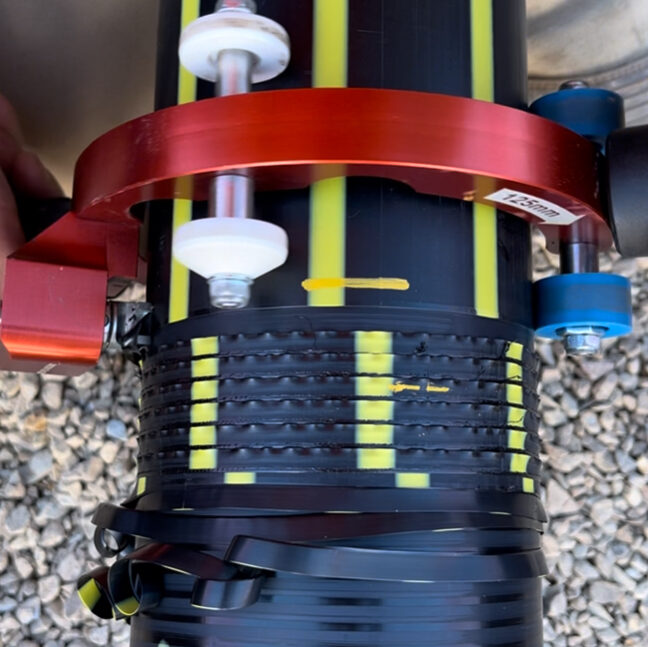
Electrofusion is incredibly dependent on proper pipe preparation.Scraping, cleaning, alignment, insertion depth, restraint and cooling all matter.
If the preparation is rubbish, the expensive electrofusion fitting isn’t going to save you.