Blended Learning: 1-3 hrs online theory | 4 hrs face-to-face training per Unit of Competency.
You’ll learn a solid mix of technical, practical, and safety-focused skills essential for working in the pipeline and plastics fabrication industries.
Key skills learned include:
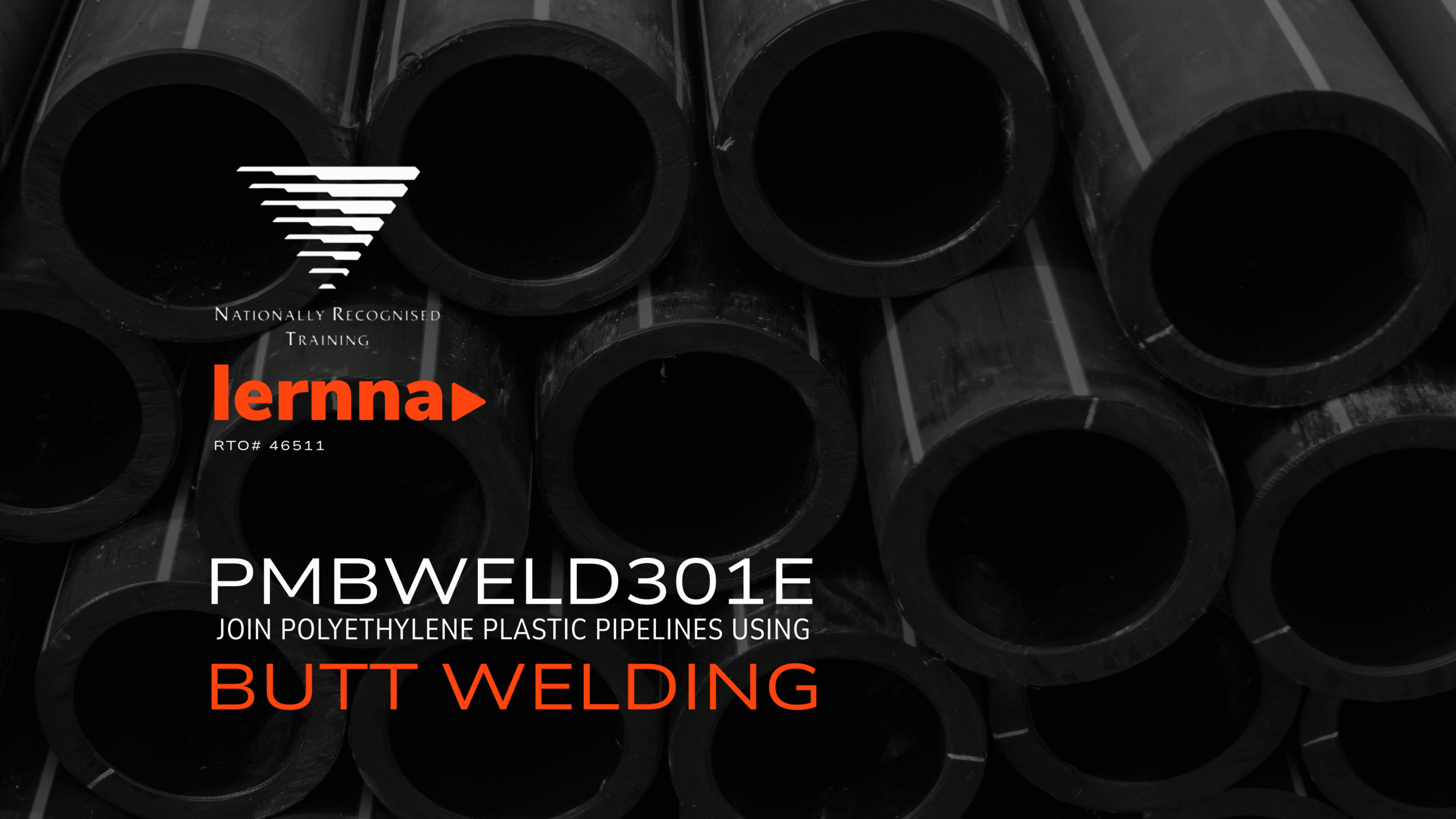
PMBWELD301E
Join polyethylene plastic pipelines using butt welding
• Understanding materials and equipment
Students learn how different thermoplastic materials behave, how to select the correct welding method, and how to set up, operate, and maintain welding equipment safely and efficiently.
• Performing a range of plastic welding techniques
This includes butt welding, electrofusion welding, extrusion welding, and other methods required to meet job specifications. Students practise preparing surfaces, aligning components, controlling temperatures, and completing welds to industry standards.
• Interpreting job instructions and specifications
Learners develop the ability to read and follow technical drawings, plans, and work requirements to ensure welds meet structural, functional, and regulatory criteria.
• Conducting inspections and quality checks
Students are taught how to inspect welds visually, perform basic testing, identify defects, and take corrective action to ensure the weld’s integrity and compliance with workplace or industry standards.
• Applying WHS and environmental procedures
A major component involves understanding and following safe work practices, risk control measures, and environmental responsibilities relevant to plastic welding and pipeline installation.
• Preparing and completing job documentation
Students learn how to accurately record work activities, testing outcomes, and compliance information in line with workplace procedures.
PMBWELD301E equips students with the hands-on capability and professional discipline needed to produce reliable, high-quality plastic welds in real-world field and workshop environments.
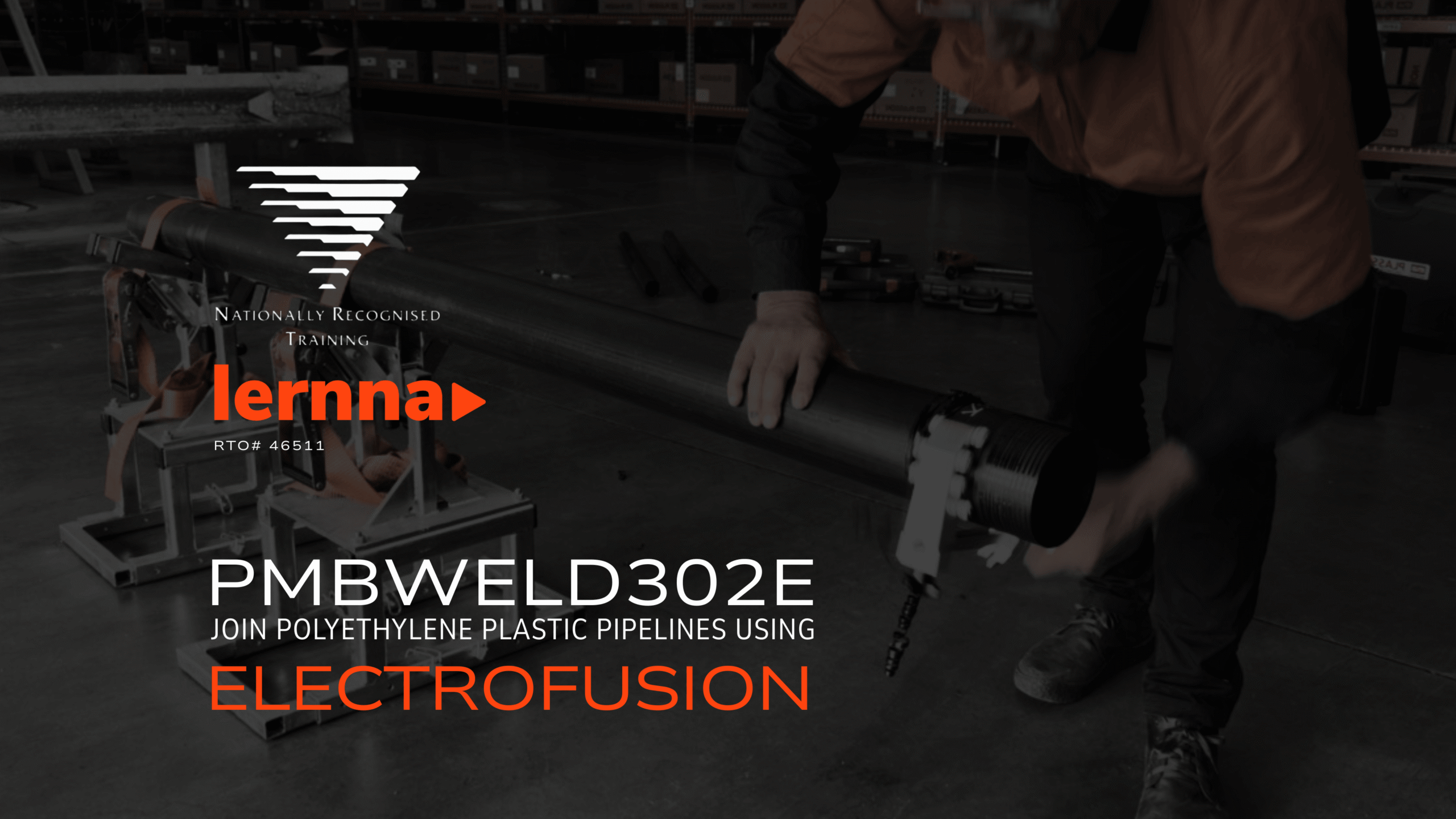
PMBWELD302E
Join polyethylene plastic pipelines using electrofusion
You’ll learn the specialist knowledge and hands-on skills required to safely and accurately carry out electrofusion welding on polyethylene (PE) pipelines—one of the most widely used joining techniques in Australia’s water and gas industries. This accredited unit builds on foundational plastic welding skills and focuses specifically on the procedures, equipment, and quality standards needed to produce strong, reliable, and compliant electrofusion joints.
Throughout the unit, you’ll learn how to identify and prepare materials, including recognising compatible PE pipes and fittings, assessing environmental conditions, and preparing surfaces correctly to ensure a clean, high-integrity weld. You’ll be trained to operate electrofusion control boxes and associated equipment, interpret their readings, and follow manufacturer specifications and industry guidelines step-by-step.
A major component of the course is understanding how to set up, align, and secure components prior to fusion, ensuring the joint remains stable and contamination-free. You’ll practise conducting welds under controlled parameters, monitoring fusion cycles, and carrying out visual inspections and basic testing to verify weld quality and compliance.
In addition, the unit emphasises WHS practices, risk management, and environmental responsibilities, preparing you to work safely in both field and workshop settings. You’ll also learn how to complete documentation, record weld details, and follow workplace procedures that support traceability and asset management.
By the end of the training you’ll have the confidence and capability to perform poly welding to industry-approved standards, making you job-ready for roles across the pipeline construction, maintenance, and utilities sectors.